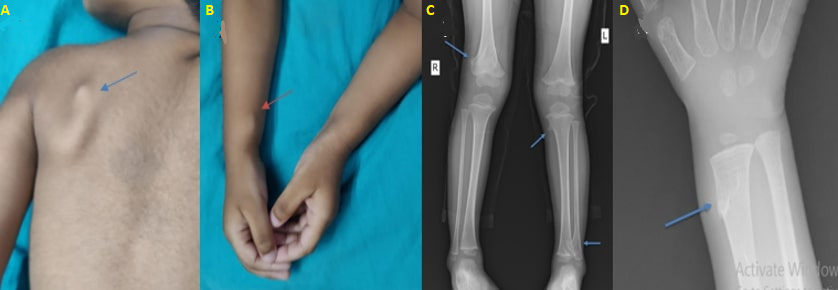
The most prevalent benign bone tumor, osteochondroma, accounts for 30 to 35% of all benign bone tumors. It most frequently affects teenagers and young adults, with a 1-in-50,000 incidence rate. Osteochondroma only has a 1% chance of developing into a malignant condition like chondrosarcoma. Osteochondroma has an autosomal dominant pattern, and prehypertrophic chondrocytes in the growth plate are affected by the EXT gene mutation. Osteochondroma patients typically have their knee joint affected and typically report painless swelling around major joints. These swellings result from the long bone´s metaphysis´s excessive development of cartilage and bone. This swelling could result in mechanical symptoms like compression of the neurovascular system. The mother of a 3-year-old kid brought him to the orthopaedics outpatient department with complaints of painless swelling in the right wrist, left scapula, and left ankle that had been reported two months prior. Her 5-year-old sibling has a similar, painless swelling that is only modest in size. The patient is being handled conservatively and recommended to keep regular follow-ups every three months because they currently have no additional complaints. The state and prognosis of the disease have been disclosed to the patient´s parents. Operative management needs to wait till the skeleton is fully developed.
Corresponding Author
Rahul Agola, Department of Orthopaedics, Datta Meghe Institute of Medical Sciences, Wardha, Maharashtra, India (parthshah6396@gmail.com)